Metal frames look simple on a shelf and complicated on a production floor. Three processes decide almost everything about how they wear: cutting, welding and polishing.
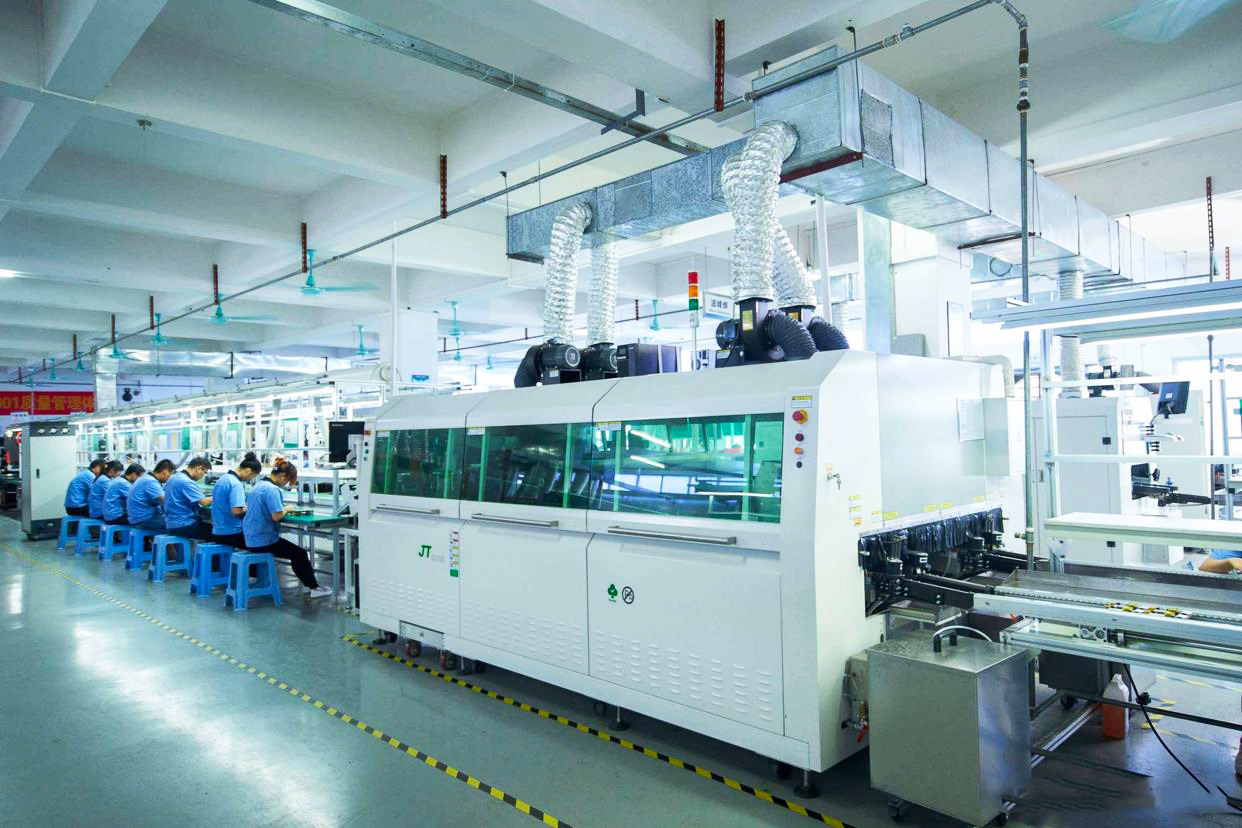
This page walks through those three stages, using a real run from our own line in Shenzhen.
Why metal frames are still specified
Metal is chosen for reasons that have little to do with appearance. A metal frame can be built thin without looking fragile, it holds its shape when a hinge is adjusted for the tenth time, and it takes plating and finishing that acetate cannot match. For long-wear and clinical channels, the material also settles the question of nickel release, which is why metal specifications so often arrive with a test requirement attached.
Stage 1 - Cutting
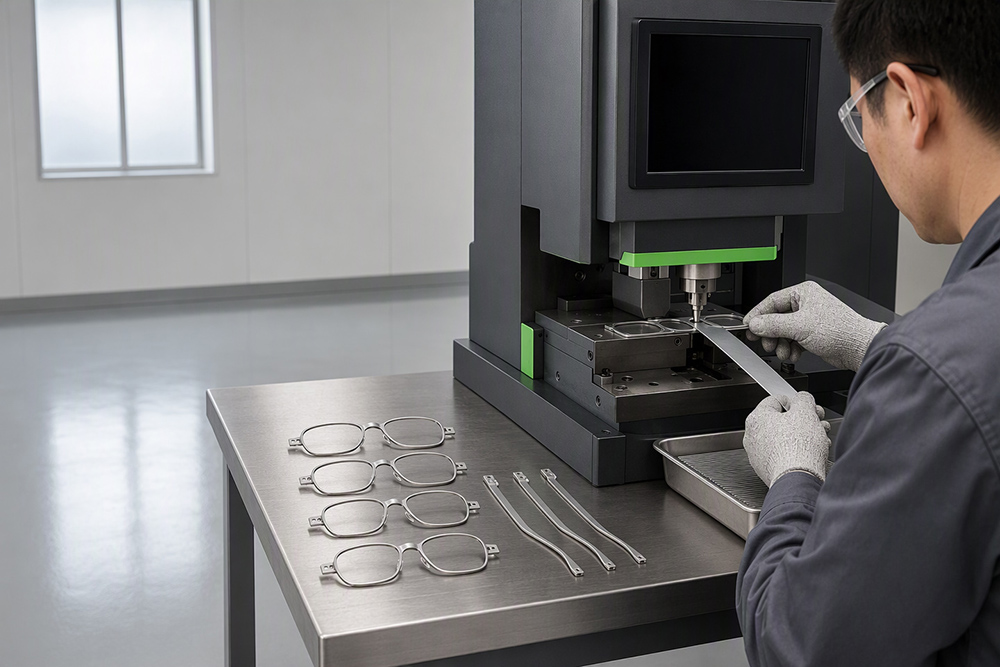
Every metal frame starts as a flat component rather than a finished shape. Components are cut to a tolerance, then formed to the front curve and the temple line.
Two things are decided here:
- Tolerance. A cut that is out by a fraction shows up later as an uneven gap at the hinge, which cannot be polished away.
- Grain and direction. The way the metal is oriented affects how it behaves when it is bent, and therefore whether the frame keeps its alignment after adjustment.
This is also the stage where a design change is cheapest. Once components are cut and tooling is committed, a shape change costs more than a material change.
Stage 2 - Welding
Welding joins the front, the bridge and the hinge points. It is the stage where most quality complaints originate, because a weak joint does not fail at the bench - it fails after three months of daily wear.
What to look for:
- Joint preparation. Components need to be clean and aligned before welding; contamination shows up as porosity.
- Consistent heat. Too much heat distorts the frame; too little leaves a joint that looks fine and is not.
- Correction after welding. Frames are checked and corrected for alignment here, not at final inspection.
For buyers, the practical question is not "do you weld?" but "who checks the joint, and at which stage". A factory that controls this at the bench will catch a problem while the frame is still recoverable.
Stage 3 - Polishing
Polishing is where a frame stops looking like a component. It is also the most skill-dependent stage, and the hardest to inspect by numbers alone.
- Surface preparation removes the marks left by forming and welding.
- Progressive polishing works through finer media; skipping a step leaves a surface that looks acceptable under workshop light and shows scratches under retail light.
- Final inspection should happen under a consistent light source, with reference samples for the finish agreed in the sample round.
Weight is worth watching at this stage. A frame that has been over-polished to hide a defect comes back lighter than the approved sample, which is one of the fastest ways to spot a process problem.
What to ask your supplier
| Stage | Question | A good answer sounds like |
|---|---|---|
| Cutting | Who makes and adjusts the tooling? | In-house, with a named revision turnaround |
| Cutting | How is component tolerance controlled? | A stated tolerance and a measuring step |
| Welding | Where are joints checked? | Named stages, not only final inspection |
| Welding | Who corrects alignment? | The same bench that welds, before finishing |
| Polishing | How is the finish standard agreed? | Reference samples kept for your order |
| Polishing | How is weight controlled? | Target weights in the spec sheet |
| All | Which test reports exist? | Documents sent within a day |
FAQ
How long does it take to develop a metal frame? It depends on whether new tooling is required and how many revisions the design needs. In-house tooling shortens the loop, because a revision does not wait on an outside supplier. Ask for a stage-by-stage timeline with a sample milestone at each stage rather than a single delivery date.
Are welded frames weaker than one-piece frames? Not inherently. What matters is joint preparation, heat control and whether alignment is corrected before finishing. A well-made welded frame can outlast a poorly controlled one-piece design.
What does polishing have to do with the price? Polishing is skilled hand work. Cheaper quotations often reduce the number of polishing stages, which looks acceptable in photographs and less so under retail lighting.
Next step
If you are developing metal frames, the fastest way to judge a factory is to ask these questions and then ask to see the line rather than the catalogue.
Send us your drawing, a sample or a mood board and we will come back with a material recommendation, tooling requirement and indicative timeline.