
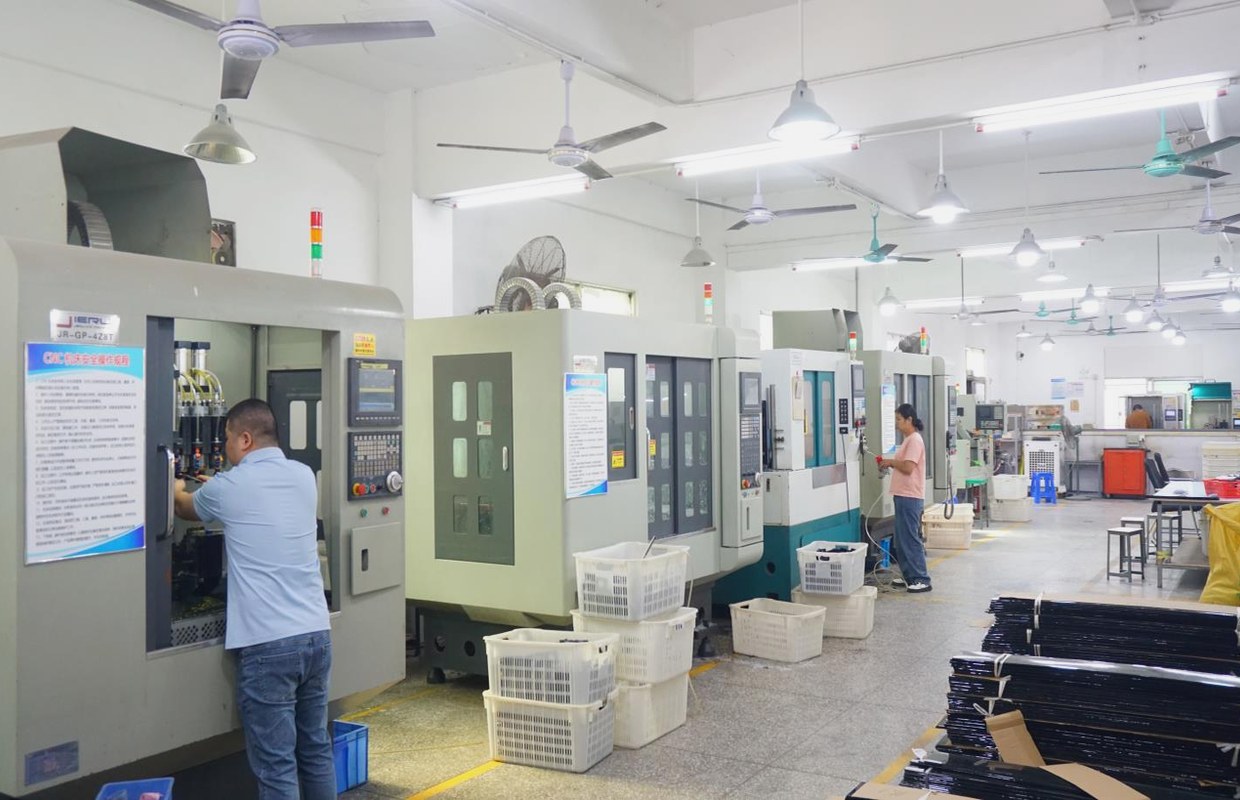
Choosing a frame factory is not a price comparison. It is a decision about who controls the variables you cannot see from the outside — tooling tolerances, hinge life, colour consistency, and the paperwork that decides whether your container clears customs.
This checklist is written for buyers placing their first or fifth private label order. It works for acetate, titanium, TR90/Ultem, sunglasses and children's frames.
Why the first supplier decision is the expensive one
Most sourcing problems are not product problems. They are process problems that surface months later: a colour that drifts between batches, a temple that loosens after three months of wear, or a certificate the importer asks for that nobody can produce.
By the time these appear, you have paid for tooling, packaging, and freight. The cheapest way to avoid them is to ask the right questions before the first sample.
Stage 1 — Capability (what the factory can actually do)
1. Is tooling and mould development in-house?
This is the single most reliable predictor of how much pain a development round will give you. When moulds are developed and adjusted on site, changes are discussed at the bench and turned around in days. When tooling is outsourced, every revision becomes a negotiation between three parties.
Ask: "Who makes the mould — your team or a third party? How long does one revision take?"
2. Which materials do they genuinely run, and which do they outsource?
Many factories present a full catalogue while only running one or two material families in-house. Ask for each family you care about — acetate, titanium, TR90/Ultem, nylon — and ask what share of that production stays on site.
3. Can they work from drawings, samples or a mood board?
A factory that needs a completed technical drawing is a contractor. A factory that can read a mood board, propose the material and the shape, and iterate on samples is a development partner. Decide which one your programme actually needs.
4. How many development rounds are included?
Get this in writing before you pay tooling. "Unlimited revisions" and "two revisions" are very different commercial offers.
Stage 2 — Materials and finishing
5. Can you see colour consistency across batches?
Acetate takes colour and pattern work that metal cannot, which is why most house-brand programmes start there. But the colour you approve on a sample is not automatically the colour you receive in March.
Ask: "Can you keep it to a Delta E limit, and do you keep reference plaques for my colour?"
6. What finishing processes run in-house?
Polishing, tumbling, splitting, pad printing and surface blasting are where a frame stops looking like a component and starts looking like a product. Ask which of these are on site — the answer tells you how much finishing risk sits outside your control.
7. How do they handle logo application and packaging?
Logo printing, colour matching and packaging are usually quoted separately and are the most common source of rework. Ask for a sample of the actual logo application on the actual material, not a photo of someone else's frame.
8. Does the frame weight match the positioning?
A titanium frame sold at a premium and a TR90 frame sold on value should feel different in the hand. Ask for target weights in the spec sheet. Weight is also the fastest way to spot a material substitution.
Stage 3 — Quality and compliance
9. Which tests do they run, and can you see the reports?
For European buyers, the questions to ask are specific:
| Market / requirement | What to ask the factory |
|---|---|
| EU personal protective equipment (sunglasses as PPE) | Testing to PPE Regulation (EU) 2016/425 |
| Metal frame wear simulation | EN 12472 wear simulation for hinges and metal cores |
| Nickel release (long-wear and clinical channels) | EN 16128 nickel release testing |
| UK | UKCA marking support |
| US | Whether they can support the requirements that apply to your product class |
Ask for the report, not the claim. A factory that has done the testing can send the document within a day.
10. Where does quality control actually happen?
There is a difference between a final inspection before packing and control at every production step. Interval control catches problems while the frame is still recoverable; final inspection only tells you what you are about to ship.
Ask: "At which stages is a batch checked, and who signs off?"
11. What happens when a batch fails?
Ask for the rework and replacement policy in writing. Even better, ask for an example of a failure from the last year and how it was resolved. The answer tells you more than any factory certificate.
Stage 4 — Commercial terms
12. What is the real minimum order quantity?
MOQ is the most misunderstood number in sourcing, because a high MOQ on a new mould is not the same as a high MOQ on an existing style.
Ask two separate questions:
- "What is the MOQ if I use your existing tooling?"
- "What is the MOQ if you cut a new mould for me?"
The first number is what lets a new brand start. The second is what a mature brand budgets for.
The 12 questions, in one table
| # | Question | A good answer sounds like |
|---|---|---|
| 1 | Who develops and adjusts the mould? | In-house, with a named revision turnaround |
| 2 | Which materials run in-house? | A specific list, with outsourcing admitted |
| 3 | Can you start from a mood board? | Yes, with a proposed material and shape |
| 4 | How many revisions are included? | A written number |
| 5 | How is colour consistency controlled? | A tolerance limit and retained reference plaques |
| 6 | Which finishing steps are on site? | Polishing, tumbling, splitting, pad printing, blasting |
| 7 | Can I see my logo on my material? | A physical sample, on request |
| 8 | What are the target weights? | Numbers in the spec sheet |
| 9 | Which test reports exist? | Documents sent within a day |
| 10 | Where is QC performed? | Named stages and sign-off |
| 11 | What is the rework policy? | A written policy plus a real example |
| 12 | What is the MOQ, existing vs new tooling? | Two separate numbers |
Red flags worth walking away from
- Test reports that "can be arranged" but never arrive.
- A single MOQ figure that does not distinguish existing tooling from new moulds.
- Inability to name the finishing processes on site.
- Samples that arrive without a spec sheet, weights, or measurement tolerances.
- Pressure to pay tooling before the drawing is agreed.
FAQ
How long does a private label development round take? It depends on material and whether new tooling is required. In-house tooling shortens the loop because revisions do not wait on a third party. Ask your factory for a stage-by-stage timeline and hold them to the sample milestones rather than the total.
Is a lower MOQ always better? No. A low MOQ on existing tooling is excellent for validation orders. A low MOQ that pushes the factory to cut corners on QC is not. Start small on proven tooling, then invest in your own mould once the style sells.
Do I need CE or UKCA marking? It depends on your product class and market. Sunglasses are often treated as personal protective equipment in the EU, which brings specific testing obligations. Confirm the requirement for your exact product before ordering, and ask your factory which tests they already run.
Can I mix materials in one order? Usually yes, but the tooling and finishing paths differ, so ask for separate MOQs and lead times per material rather than one blended number.
Next step
If you are sourcing frames under your own label, start with the questions above — then ask the factory to walk you through a live production line rather than a catalogue.
Send us your drawing, sample or mood board → and we will come back with a material recommendation, tooling requirement and indicative timeline.