Why nickel release is the first test mentioned
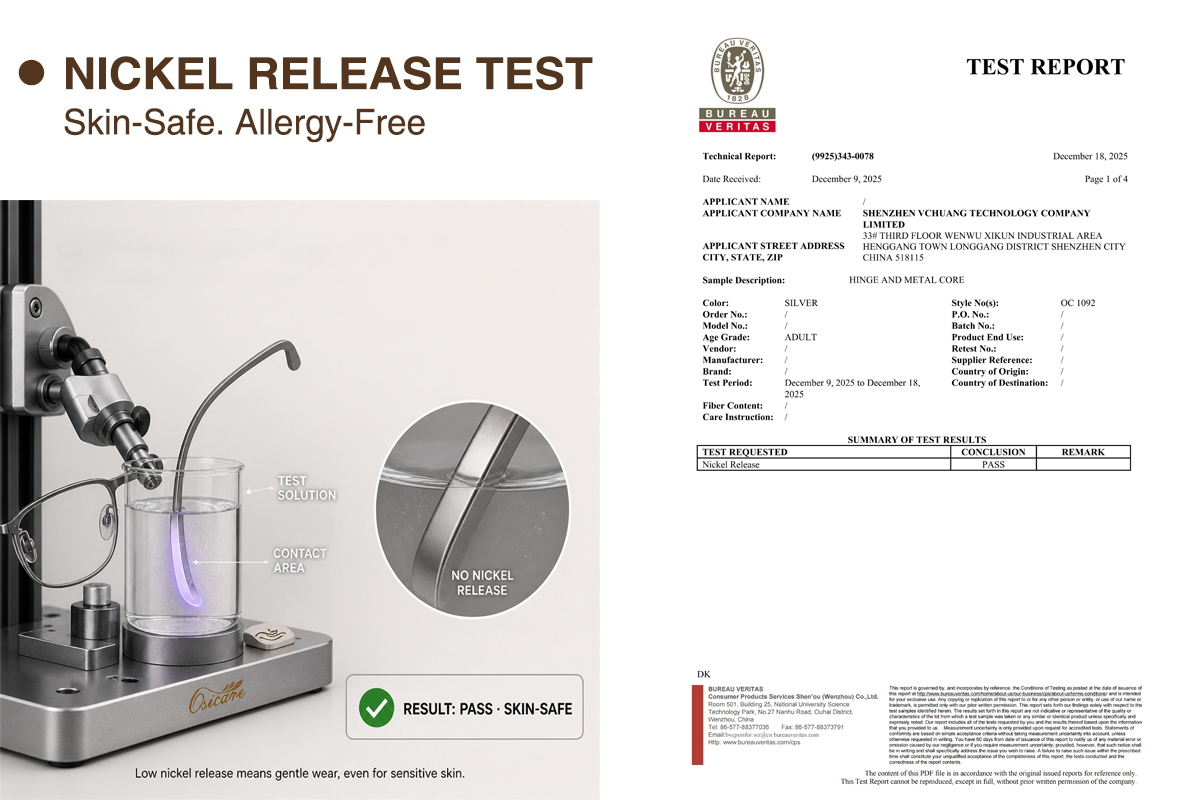
Nickel release affects anyone wearing a metal frame against skin for hours at a time. It is a routine requirement in long-wear and clinical channels, and it is decided by the metal core and hinges as much as by the visible surface.
What this article covers
- What EN 16128 measures, and which parts of a frame are actually tested
- Why the metal core and hinge assembly matter more than the finish
- How wear simulation under EN 12472 fits alongside it
- What the report looks like, and which numbers your buyer will read
- How to plan the test into a development round instead of after it
Build it into the sample round
Testing after production is a rework exercise. Testing on the first sample is a design input, and it usually changes one material choice rather than the whole frame.
Send us your drawing, sample or mood board and we will come back with a material recommendation, tooling requirement and indicative timeline.